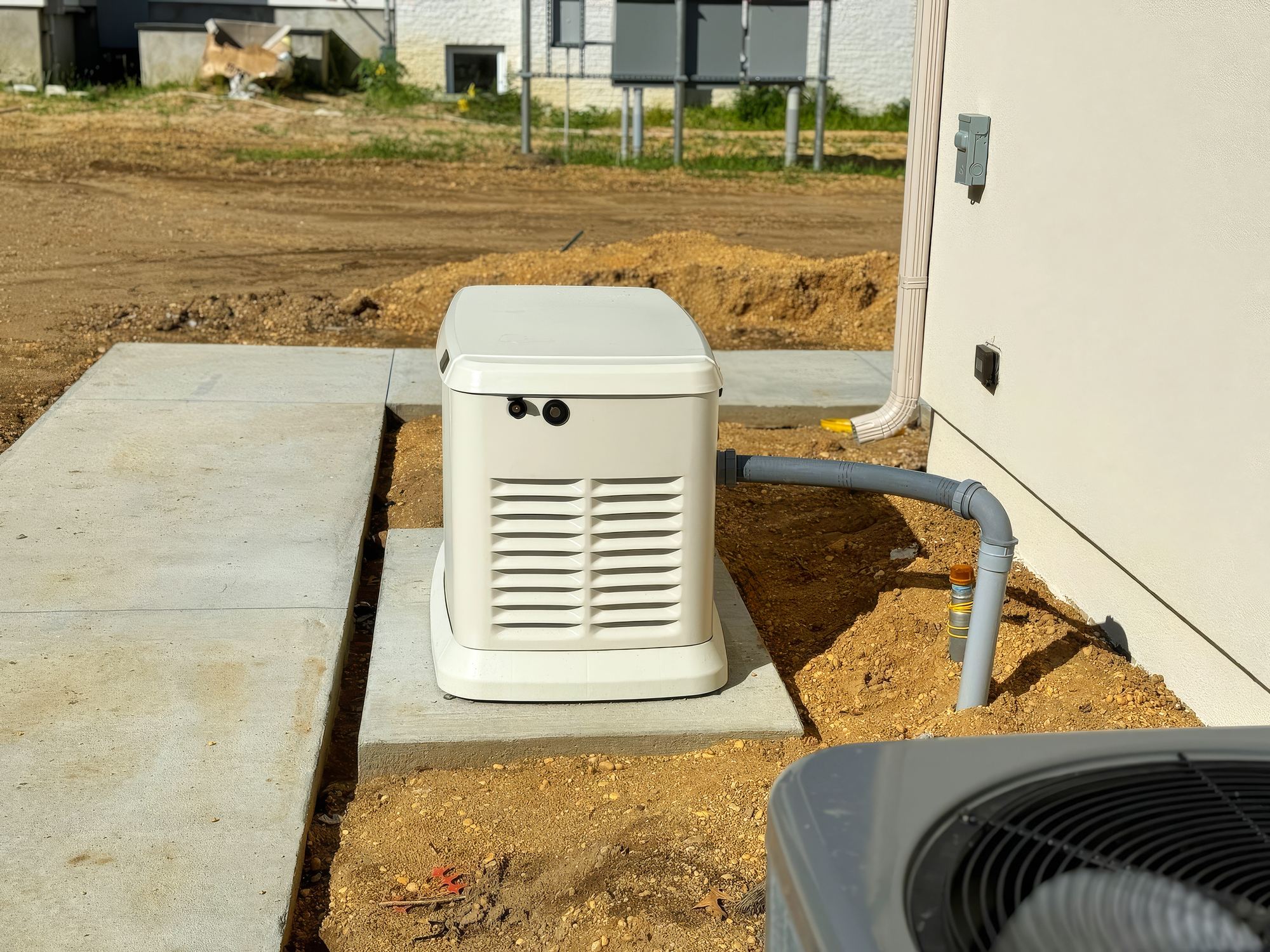
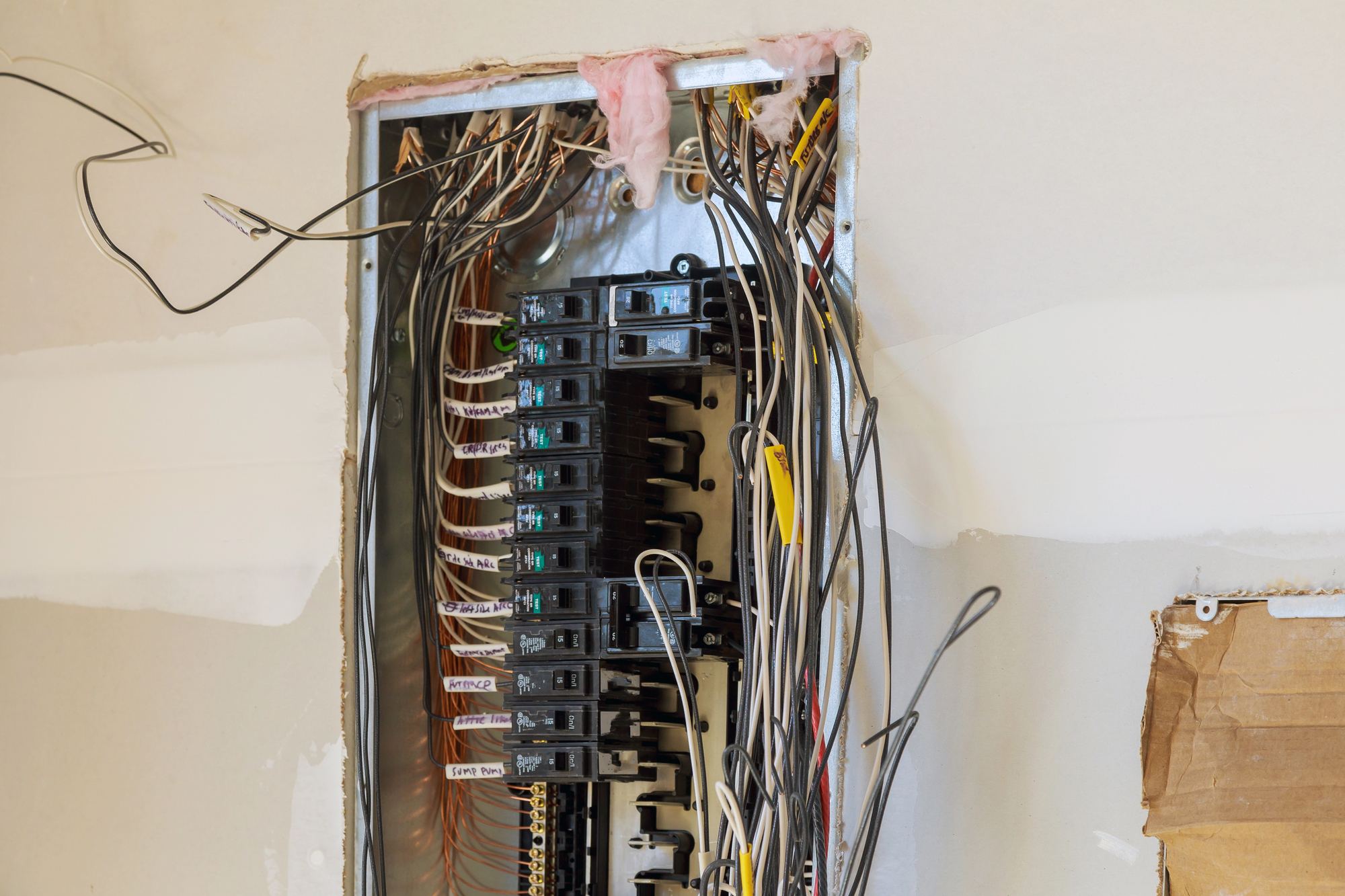
What a whole house generator installation involves
The job has more parts than most people expect, and each one matters to how the system works on the day you need it.
- Sizing. We add up what you want running: furnace or heat pump, central air, sump pump, well pump if you have one, kitchen, laundry and lights. That load calculation sets the generator size and the type of transfer switch.
- Placement and pad. The unit goes outside on a level pad, close to the gas meter and electrical panel when possible, with the clearances the manufacturer and code require from windows, doors and vents.
- Fuel. A gas line runs from your meter to the generator, sized for its full-load demand. Propane homes need a tank big enough for the runtime you want.
- Transfer switch. An automatic transfer switch is wired between the utility and your panel. It's what lets the generator take over safely and hand the house back when the grid returns. More on that on the transfer switch page.
- Permits, inspection and startup. The electrical and gas work are permitted and inspected. Once it passes, we start the unit, set its exercise schedule and walk you through how it works.
When a standby generator makes sense
Kansas City gets its share of outages: summer thunderstorms with high winds, ice storms that bring down limbs and lines, and the occasional long one. In the January 2002 ice storm, some homes in the metro went close to two weeks without power. Most outages are much shorter, but the ones that hurt are the ones that come with a flooded basement or a freezing house.
A standby unit is usually worth a look if you have:
- A finished basement that depends on a sump pump
- Someone at home on oxygen or other powered medical equipment
- A home office or business you run from the house
- A house you leave empty while you travel
- A deep freezer, well pump or aquarium you can't afford to lose
If outages at your place mean a few hours of no TV, a portable generator with a transfer switch may cover it for a lot less. We'll tell you that if it's true.
Whole home coverage or just the essentials
There are two ways to set up a standby generator, and the choice drives most of the cost.
Whole home. The generator is big enough to run everything, including central air, and the transfer switch covers the whole electrical service. Nothing changes inside the house during an outage. Many systems use load management modules that briefly hold off big appliances, like the AC or an electric dryer, so they don't all start at once.
Essentials only. A smaller generator runs a chosen set of circuits: furnace blower, refrigerator, sump pump, garage door, a few lights and outlets, and the internet router. It costs less to buy and uses less fuel, but you'll live a little differently until the power comes back.
Why generators get sized wrong
Most problems we hear about come back to sizing. A unit that's too small trips or struggles when the air conditioner kicks on. One that's too big costs more up front and burns more fuel than it needs to. The other common miss is fuel supply: a home gas meter that was fine for a furnace and water heater may not keep up with a generator at full load. We check the meter early, because if the gas utility has to change it, that step takes time.
What affects the price
The generator itself is only part of the bill. The size, the type of transfer switch, how far the gas line runs, whether your meter or panel needs an upgrade, the pad, and permits all show up on the estimate. The whole house generator cost page walks through each one. If you're comparing brands, the Generac installation page covers the most common one we see.
Questions about whole house generators
Should I get a whole house generator or a portable one?
A portable generator costs far less up front, but you have to be home to set it up, run cords or use a transfer switch, and keep it fueled every few hours. A whole house generator sits on a pad outside, runs on your gas supply, and turns on by itself in seconds. If you travel, have a sump pump, work from home or have someone on medical equipment, the standby unit is usually worth the difference.
Where can a standby generator go on my property?
Outside, on a level pad, usually along the side or back of the house near the gas meter and electrical panel, which keeps the runs short. Manufacturers set minimum distances from windows, doors, vents and the house wall so exhaust stays out, and those distances are part of the inspection. It can’t go in a garage, a crawl space or under a deck.
How loud is a whole house generator?
Under full load it’s louder than a central air unit, about like a lawn mower heard from across the yard. Most models run their weekly self-test at a lower speed, so it’s quieter then. Manufacturers publish a sound rating for each model, and placement matters too: we try to keep it away from bedroom windows and the neighbor’s patio.
Does a standby generator test itself?
Yes. Most home standby units run a short exercise cycle on a schedule, often weekly, to keep the engine lubricated and the battery charged. Many newer units can also send alerts to your phone if something needs attention, so you find out before an outage instead of during one.